Is Cycling Safe in Malaysia? What the Data Actually Says
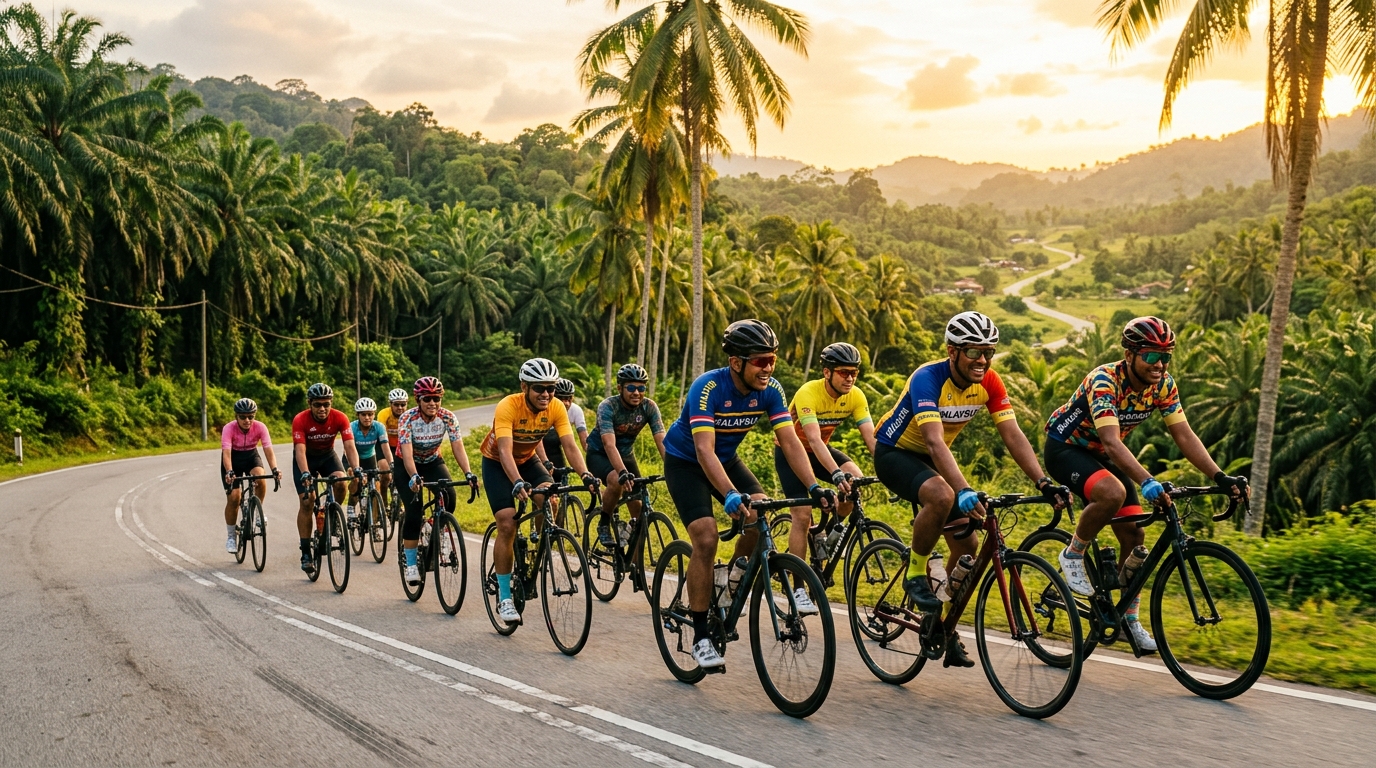
Cycling in Malaysia Is Booming — Here’s What You Should Know
Malaysia is in the middle of a cycling revolution. What started as a pandemic-era escape has become a permanent fixture of Malaysian life. Weekend group rides fill the roads from Putrajaya to Penang. Events like OCBC Cycle KL, Le Tour de Langkawi, and dozens of sportives across every state draw thousands of riders each year. Cycling clubs are growing faster than ever, and bike shops report sustained demand years after the initial COVID boom.
But as the community grows, so does the conversation around safety. If you have searched “is cycling safe in Malaysia” — whether you are a new rider, a returning cyclist, or a concerned family member — this article gives you the honest, data-backed picture. Not to scare you off the bike, but to help you ride smarter.
The Big Picture: Malaysia’s Roads
Malaysia records approximately 600,000 road accidents per year, with around 6,000 to 6,400 fatalities annually — a rate of roughly 13.9 deaths per 100,000 population. That is higher than many developed nations and reflects the realities of a car-and-motorcycle-dominated transport system.
The overwhelming majority of road fatalities — around 65 to 70% — involve motorcyclists. Cyclists account for approximately 2% of total road deaths, according to the Ministry of Transport Malaysia.
That 2% figure needs context. It reflects the fact that cycling volumes are still relatively low compared to motorised transport. It does not mean cycling is inherently safe or dangerous — it means there are fewer cyclists on the road, so fewer appear in the statistics.
What the Crash Data Tells Us
When cycling incidents do occur, they tend to be more serious than the average road accident. Police data from one reporting period recorded 201 cycling-related crashes resulting in 107 fatalities. Academic studies from Malaysian universities confirm that cycling collisions carry a higher severity rate than most other road user categories.
The reason is simple physics: a cyclist has no protective shell. But this is true everywhere in the world, not just Malaysia. The key difference is where and how those incidents happen — and that is where the data becomes useful.
Research identifies clear patterns:
- Highways and trunk roads carry the highest risk — these are high-speed environments not designed for cyclists
- Low visibility is a major factor — early morning rides, poor lighting, dark clothing
- Junctions and roundabouts are common hotspots, especially where drivers do not expect cyclists
- Group riding on busy roads — riding two or three abreast reduces margins for everyone
The encouraging takeaway: most of these risk factors are avoidable through route choice and good habits.
The Trend: More Riders, Improving Awareness
Cyclist fatalities had been declining since around 2015 as part of broader road safety improvements. The post-2020 cycling boom temporarily reversed that trend — more riders on the road naturally means more exposure.
But the picture is not all negative. The growth in cycling has also brought:
- Greater driver awareness — motorists in popular cycling areas are increasingly accustomed to sharing the road
- More organised events with proper marshalling, road closures, and safety briefings
- Growing advocacy from cycling clubs and organisations pushing for better infrastructure
- Commercial investment in cycling safety gear, lights, and accessories now widely available at Malaysian retailers
The cycling community is bigger, louder, and more visible than ever. That visibility is itself a safety improvement.
Where Malaysia Is Getting It Right
It is easy to focus on gaps, but several areas deserve credit:
- Putrajaya has dedicated cycling paths and regularly hosts cycling events — it is one of the safest and most pleasant places to ride in the country
- Penang has invested in cycling tourism infrastructure along its coastline and heritage areas
- Kuala Lumpur has introduced bike lanes in selected areas and expanded park connector paths
- Event organisers across Malaysia consistently run well-marshalled rides with safety briefings, support vehicles, and emergency protocols
- Cycling communities self-organise safety practices — group ride etiquette, route sharing, incident reporting
Where There Is Room to Grow
Malaysia does not yet have a national cycling infrastructure framework comparable to the Netherlands or Singapore. Protected bike lanes are the exception rather than the rule. Cycling-specific data is scattered across multiple agencies — MOT, PDRM, MIROS, and academic institutions — making it difficult to track trends or prioritise investment.
The good news is that the conversation is happening. State governments, cycling advocacy groups, and event organisers are all pushing for better infrastructure. The sheer growth of the cycling community creates political momentum that did not exist five years ago.
How to Ride Smarter in Malaysia
The data points to practical steps that dramatically reduce risk. None of these require special skills — just awareness and preparation.
Pick Your Routes
This is the single biggest factor in your safety. Avoid highways and high-speed trunk roads. Stick to secondary roads, residential areas, and established cycling routes. Putrajaya, Cyberjaya, Taman Botani, and park connectors are popular for good reason. Check our route guides for cyclist-tested roads across every state.
Be Seen
Front and rear lights are essential — even during the day. Bright kit, reflective elements, and high-visibility accessories are not optional extras in Malaysia. Dawn and dusk are the highest-risk periods for visibility, so if you ride early mornings, light up.
Ride Predictably
Hold your line. Signal turns. Avoid sudden swerves. Malaysian drivers may not be expecting cyclists, so the more predictable you are, the safer the interaction.
Group Ride Smart
Single file on busy roads. Designate a ride leader and sweep rider. Use hand signals for hazards. Keep the group tight and disciplined. A well-organised group ride is actually safer than riding solo because of increased visibility.
Gear Up
A properly fitted helmet is non-negotiable. Gloves protect your hands in a slide. Glasses protect your eyes from debris and insects — a surprisingly common cause of incidents.
Know Your Events
If you are new to cycling, organised events are one of the safest ways to ride on Malaysian roads. Events like OCBC Cycle KL and PERKESO Run & Ride offer marshalled routes, road closures, and support — a much lower-risk environment than solo riding on public roads. Check our events calendar for upcoming rides.
The Bottom Line
Cycling in Malaysia is safe when you ride smart. Hundreds of thousands of Malaysians ride every week — commuting, training, racing, and exploring — without incident. The community is growing, the infrastructure is slowly improving, and the conversation around cyclist safety has never been louder.
The data does not say “don’t cycle.” It says: choose good routes, be visible, ride predictably, and ride together. Do that, and cycling in Malaysia is one of the best ways to stay fit, explore the country, and join a community that is only getting stronger.
See you on the road.
Sources: Ministry of Transport Malaysia, Royal Malaysia Police (PDRM), Malaysian Institute of Road Safety Research (MIROS), Asian Transport Observatory, ScienceDirect, ResearchGate, Planning Malaysia Journal.
Have questions?
Chat with our cycling expert on WhatsApp for personalised advice.
Chat on WhatsApp